
A fisherman’s hook is one of the most important pieces of fishing tackle. It connects the bait or lure to the fishing line and is designed to catch and hold a fish when it strikes. Although a fishing hook may look like a simple piece of metal, its shape, size, strength, point, and design can significantly affect how well it performs.
This guide explains the most common types of fishing hooks, hook sizes, parts of a hook, and practical ways to choose the right option for different fishing situations.
What Is a Fisherman’s Hook?
A fisherman’s hook is a curved metal device used to catch fish. It normally has a sharp point and a barb that helps prevent the fish from escaping after the hook penetrates.
Fishing hooks are available in many shapes and sizes. Some are designed for live bait, while others are made specifically for artificial lures, saltwater fishing, fly fishing, or particular species.
The basic purpose remains the same: the hook must present the bait naturally and provide reliable penetration when a fish takes it.
The best hook is not necessarily the largest or strongest one. It should be appropriately matched to the bait, tackle, target species, and fishing conditions.
Table of Contents
Parts of a Fishing Hook
Understanding hook anatomy makes it easier to compare different models.
Point
The point is the sharp end that penetrates the fish’s mouth. A sharp point is essential for effective hook setting.
Barb
The barb is the small projection below the point. It helps keep the hook from backing out after penetration. Barbless hooks are also available and can make fish handling and release easier.
Eye
The eye is the opening where the fishing line, leader, or split ring is attached. Different hook designs may have different eye shapes and orientations.
Shank
The shank is the section between the eye and the bend. Its length can influence how the bait sits on the hook.
Bend
The bend is the curved portion of the hook. It helps determine the hook’s overall shape and holding characteristics.
Gap
The gap is the space between the point and shank. A wider gap can provide more room for certain baits and fish mouths.
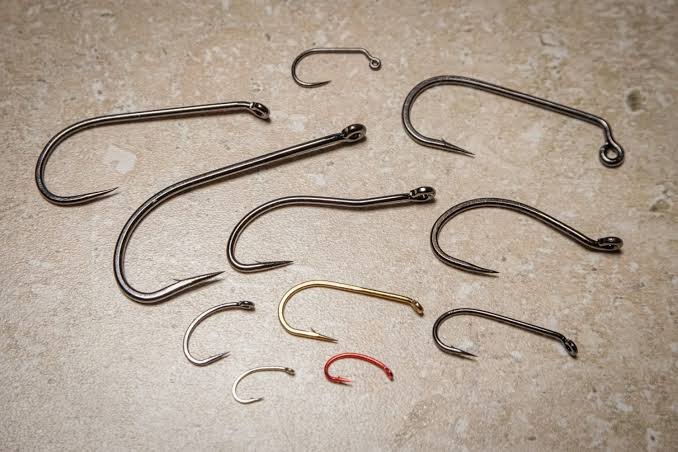
Common Types of Fisherman’s Hooks
There is no single best hook for every fishing situation. Different hook styles have different purposes.
J-Hooks
J-hooks are among the most traditional fishing hooks. Their shape resembles the letter “J,” and they are commonly used with a wide range of natural baits and fishing rigs.
They are available in many sizes and strengths, making them suitable for freshwater and saltwater applications.
Circle Hooks
Circle hooks have a distinctive curved point that turns inward toward the shank. They are commonly associated with bait fishing and are particularly useful when fish are expected to take bait and move away with it.
Anglers should follow local fishing regulations because some fisheries require or recommend circle hooks for particular species or bait-fishing situations.
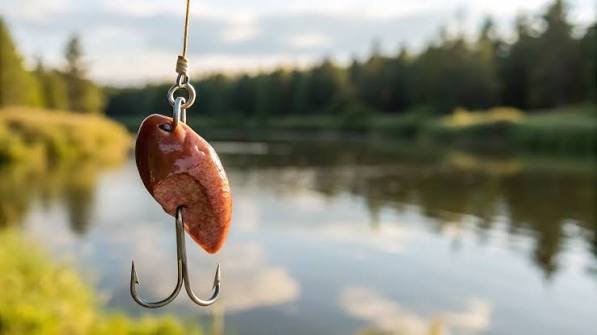
Treble Hooks
A treble hook has three points connected to a single shank. These hooks are frequently found on hard-bodied fishing lures, spoons, and other artificial baits.
Because treble hooks have multiple points, they can provide several opportunities for a fish to become hooked. However, they also require careful handling.
Weedless Hooks
Weedless hooks are designed to reduce snagging around vegetation, grass, brush, and other underwater cover. They are commonly used with soft plastic lures.
Their design can help anglers fish areas where an exposed hook would frequently become caught.
Offset Hooks
Offset hooks have a bend or offset near the eye that changes how the hook sits in the bait. They are widely used with soft plastic fishing lures.
The correct hook size is important because the hook should allow the lure to move naturally while still providing effective hook exposure when a fish bites.
Aberdeen Hooks
Aberdeen hooks typically have a relatively thin wire and long shank. They are often associated with light freshwater fishing and bait presentation.
Their lighter construction can be useful when fishing with smaller baits, although anglers should select hook strength according to the target species.
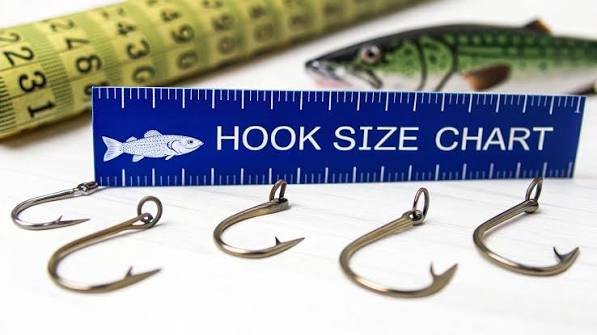
Fisherman’s Hook Sizes Explained
One of the most confusing aspects of buying a fishing hook is sizing.
For many common hook styles, sizes become larger as the number gets smaller. For example, a size 8 hook is generally smaller than a size 2 hook.
Once hook sizes reach 1, larger sizes are often expressed as 1/0, 2/0, 3/0, and so on. In this system, the larger the number before “/0,” the larger the hook generally is.
However, hook dimensions can vary between manufacturers and hook styles. A particular 2/0 hook from one design may not have exactly the same dimensions as a 2/0 hook from another design.
For that reason, anglers should consider the actual hook shape and dimensions rather than relying only on the number printed on the package.
How to Choose the Right Fisherman’s Hook
Selecting the right fisherman’s hook becomes much easier when you consider a few basic factors.
1. Consider the Target Fish
Start with the species you want to catch.
Small species generally require smaller hooks, while larger or stronger fish may require hooks with greater strength and appropriate dimensions.
For example, a small freshwater fish may be comfortably caught using a light hook, while large saltwater species can require specialized, corrosion-resistant hooks designed for heavy tackle.
2. Match the Hook to Your Bait
Your hook should work naturally with the bait.
A hook that is too large can make small bait look unnatural or interfere with its movement. A hook that is too small may not provide enough exposure for reliable penetration.
Live bait also needs enough freedom to move naturally. The way the hook is positioned can be just as important as its size.
3. Think About Fishing Location
Your fishing environment matters.
Fishing around heavy vegetation, rocks, docks, or submerged timber may call for a different hook design than fishing in open water.
For saltwater fishing, corrosion resistance is especially important because salt can damage unsuitable metal components over time.
4. Match Hook Strength to Your Tackle
A powerful hook does not automatically make a fishing setup better. The hook should work with the rod, reel, line, leader, and drag system.
Heavy hooks are appropriate for powerful fish and demanding environments, while lighter hooks can be useful when finesse and natural bait presentation are more important.
5. Check the Hook Point
A sharp point is essential.
Before fishing, inspect the point for damage, corrosion, or dullness. A hook that has become dull after repeated contact with rocks or hard surfaces may not penetrate as effectively.
Fisherman’s Hook for Freshwater Fishing
Freshwater anglers use a wide range of hooks depending on the species and technique.
For smaller fish, light-wire hooks can work well with natural baits such as worms or small pieces of bait. Bass anglers often use specialized hooks with soft plastic worms and other artificial lures.
Catfish fishing may require stronger hooks capable of handling larger bait and powerful fish.
The important principle is to match the hook size, style, and strength to the specific technique rather than using one hook for every freshwater situation.
Fisherman’s Hook for Saltwater Fishing
Saltwater fishing places additional demands on fishing hooks.
Saltwater can accelerate corrosion, so hooks designed for marine environments often use materials or finishes intended to provide better corrosion resistance.
The size and strength of the hook also need to match the target species. Offshore fishing for large species requires substantially different tackle from light inshore fishing.
After saltwater use, rinsing fishing tackle with fresh water and allowing it to dry properly can help reduce corrosion and extend the life of equipment.
Bait Hook vs. Lure Hook
A hook used with natural bait may have different requirements from one attached to an artificial lure.
With bait fishing, presentation is important. The hook should secure the bait while leaving enough of the point available for effective penetration.
Lure hooks are often selected according to the lure’s design, action, weight, and intended fish species.
Some lures use treble hooks, while others use single hooks or specialized replacement hooks. Always consider how a replacement hook could affect the lure’s balance and movement.
Barbed vs. Barbless Fishing Hooks
A barbed hook has a small projection designed to help keep the hook in place. A barbless hook lacks this projection.
Barbless hooks can make fish release easier and may reduce handling time when used correctly. However, anglers need to maintain appropriate tension because there is less mechanical resistance to the hook backing out.
Fishing regulations vary by location and species, so anglers should check the rules that apply to the water they are fishing.
How to Maintain a Fisherman’s Hook
Proper maintenance can improve the useful life of fishing hooks.
After fishing, especially in saltwater, inspect hooks for rust, corrosion, bending, or damage. Rinse appropriate tackle with fresh water and allow it to dry before storing it.
Keep hooks in a dry tackle box and avoid leaving wet hooks pressed against other metal components.
A hook that is badly rusted, bent, cracked, or damaged should generally be replaced rather than trusted with a valuable catch.
Safety Tips When Handling Fishing Hooks
Fishing hooks are extremely sharp, and treble hooks can be particularly difficult to handle safely.
Keep hooks covered when transporting tackle and avoid leaving loose hooks on boats, floors, or work surfaces. Use appropriate tools when removing deeply embedded hooks from fish.
If a hook becomes embedded in a person’s skin, avoid attempting complicated removal if the point or barb is deeply lodged, particularly near the eye or another sensitive area. Seek appropriate medical care when necessary.
Frequently Asked Questions
What is the best fisherman’s hook?
There is no single best fisherman’s hook for every situation. The right choice depends on the target fish, bait, fishing method, water conditions, and tackle.
What size fishing hook should I use?
Choose a size that matches the bait and target species. Remember that hook sizing conventions vary, so the numerical size should be considered alongside the hook’s actual dimensions and design.
Are bigger fishing hooks better?
Not necessarily. An oversized hook can make bait look unnatural and may reduce effective presentation. A hook should be large and strong enough for the intended fish without being unnecessarily large.
What is the difference between a J-hook and a circle hook?
A J-hook has a more traditional J-shaped design, while a circle hook has a more rounded shape with the point turned inward. Their use depends on fishing technique, species, regulations, and bait presentation.
How do I know if a fishing hook is sharp enough?
A hook point should be clean and sharp rather than visibly damaged or blunt. If a hook has become dull, heavily corroded, or damaged, replacing it is usually the better option.
Can I use freshwater hooks in saltwater?
Some hooks may work temporarily in saltwater, but hooks intended for marine fishing generally offer better resistance to corrosion. Always check the hook’s material and finish before using it in saltwater.
Final Thoughts
A fisherman’s hook may be small, but it can have a major impact on fishing success. Hook style, size, strength, point design, and corrosion resistance should all be considered when choosing tackle.
Instead of searching for one universal hook, match the hook to the fish, bait, environment, and fishing technique. With the right combination, you can improve bait presentation, hook performance, and overall confidence on the water.