
The biggest reason homeowners choose gunite in pool construction is flexibility. A gunite pool can be designed in many shapes and sizes, making it suitable for properties where a standard rectangular pool is not ideal.
Table of Contents
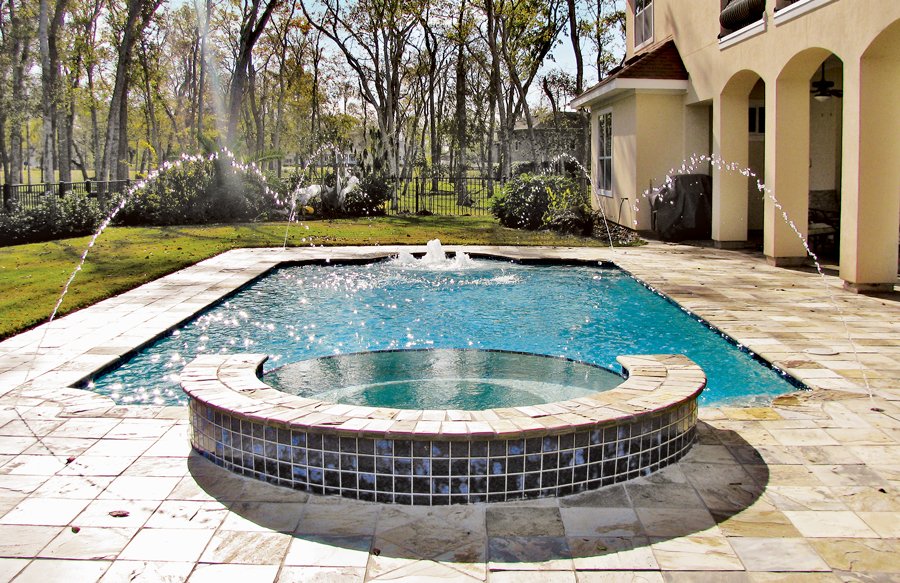
What Is Gunite in Pool Construction?
Gunite in pool construction refers to the use of dry-mix concrete that is pneumatically sprayed onto reinforced steel to create the structural shell of an in-ground swimming pool.
In the traditional dry-mix process, dry concrete ingredients travel through a hose while water is introduced at the nozzle. The material is then sprayed onto the prepared pool structure.
The gunite applicator builds and shapes the concrete shell during application. This makes it possible to create customized pool designs rather than relying on a prefabricated shape.
The completed shell can then receive an appropriate interior finish, such as plaster, quartz, pebble, or another pool surface system.
It is worth noting that the terms gunite and shotcrete are sometimes used differently by contractors. Gunite traditionally refers to the dry-mix application method, while shotcrete is a broader term for pneumatically applied concrete. If you are getting estimates, ask the contractor exactly what material and application method are included.
How Does Gunite in Pool Construction Work?
The process of building a gunite pool involves several important stages. Although individual projects differ, the basic construction sequence usually follows a similar pattern.
1. Pool Design and Planning
The first step is creating the pool design. This includes deciding the pool’s length, width, depth, shape, steps, benches, tanning ledges, spa areas, water features, and equipment locations.
A professional builder also needs to consider the property, drainage, soil conditions, access for construction equipment, local regulations, and required permits.
Good planning is especially important with gunite in pool projects because custom designs can introduce additional structural and construction requirements.
2. Excavation
Once the design is approved, the pool area is excavated.
The excavation creates the basic shape of the future pool. The depth and dimensions must match the approved design and structural requirements.
The condition of the soil can affect the construction process. Difficult excavation, unstable ground, groundwater, or restricted site access may increase the complexity and cost of the project.
3. Steel Reinforcement
After excavation, steel reinforcement is installed.
Rebar forms an important part of the pool’s structural system. It helps the concrete structure handle tensile stresses and other forces acting on the pool.
The exact reinforcement design should be determined according to the project’s engineering requirements and applicable local standards. Homeowners should ask contractors what reinforcement specifications are included rather than assuming every gunite pool uses the same design.
4. Plumbing Installation
Pool plumbing is installed before the concrete shell is sprayed.
This may include skimmer lines, suction lines, return lines, drains, cleaner lines, and plumbing for features such as fountains or waterfalls.
Proper placement is important because much of the plumbing becomes difficult to access once the gunite in pool shell has been constructed.
5. Applying the Gunite
This is the stage that gives a gunite pool its name.
The dry concrete mixture is transported through a hose and sprayed onto the reinforced structure. The applicator gradually builds the walls and floor to the required shape and thickness.
Skilled application matters because poor placement, improper water addition, inadequate consolidation, or poor workmanship can affect the finished structure.
6. Curing the Concrete
After gunite application, the concrete requires appropriate curing.
Curing allows the cementitious material to develop its intended properties. The contractor should follow the specified curing procedure for the material and project.
Homeowners should not assume that the pool shell is immediately ready for all subsequent construction work simply because the spraying stage has finished.
7. Interior Finish and Pool Completion
Once the structural work and preparation are complete, the pool can receive its interior finish.
Depending on the design, other finishing work may include tile, coping, decking, equipment installation, lighting, landscaping, and water features.
This final stage transforms the structural gunite in pool shell into a finished swimming pool.
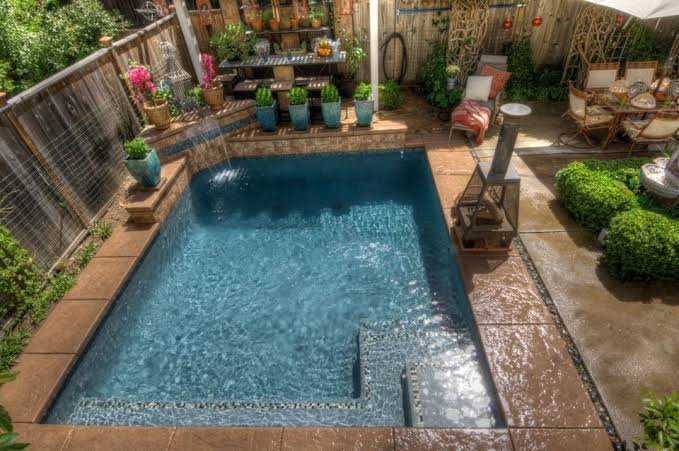
Why Is Gunite Used for Swimming Pools?
Gunite is popular because it allows builders to create highly customized concrete pool structures.
Unlike a prefabricated pool shell, a gunite pool is formed at the property. This gives homeowners considerable flexibility when designing the pool around the available space.
Gunite can be used for:
- Custom pool shapes
- Curved walls
- Built-in steps
- Tanning ledges
- Swim-out areas
- Attached spas
- Deep and shallow sections
- Water features
- Integrated benches
This flexibility is one of the strongest reasons people consider gunite in pool construction for custom backyard projects.
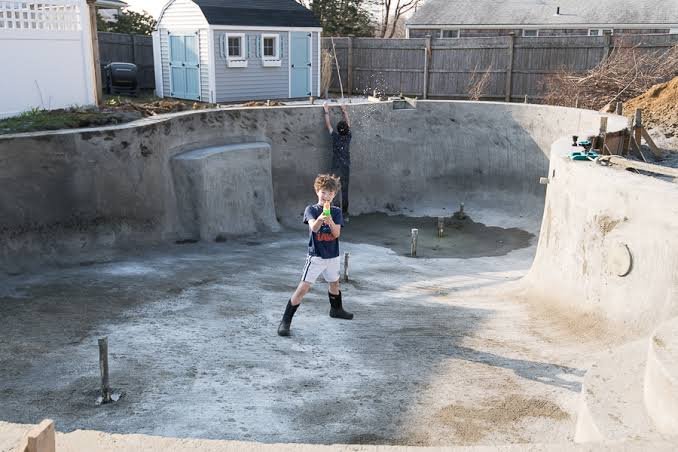
Benefits of Gunite in Pool Construction
There are several potential advantages to choosing gunite for an in-ground pool.
Customizable Design
One of the biggest benefits of gunite in pool construction is design freedom.
You are not restricted to the dimensions of a factory-made shell. The pool can be designed around your yard, landscaping, house, and personal preferences.
For example, a homeowner with an unusually shaped backyard may be able to create a curved gunite pool that makes better use of the available space.
Strong Concrete Structure
A properly engineered and constructed concrete pool can provide a durable structural shell.
However, the strength and longevity of a gunite pool depend on more than the name of the material. Engineering, reinforcement, concrete quality, application technique, curing, drainage, ground conditions, and maintenance can all affect performance.
Flexible Pool Features
Gunite makes it practical to incorporate features directly into the pool design.
Built-in seating, custom steps, tanning shelves, attached spas, and unusual shapes can all be considered during the design process.
Suitable for Large and Complex Pools
Because gunite is applied on site, it can be used for many large or complex pool designs.
The exact possibilities depend on structural engineering, site conditions, construction access, and the capabilities of the contractor.
Renovation Options
A concrete pool can often be renovated when its interior finish becomes worn.
Depending on the condition of the structure, renovation may involve resurfacing, replacing tile or coping, upgrading equipment, or making other improvements.
A professional inspection should be performed before major repairs if there are signs of structural damage.
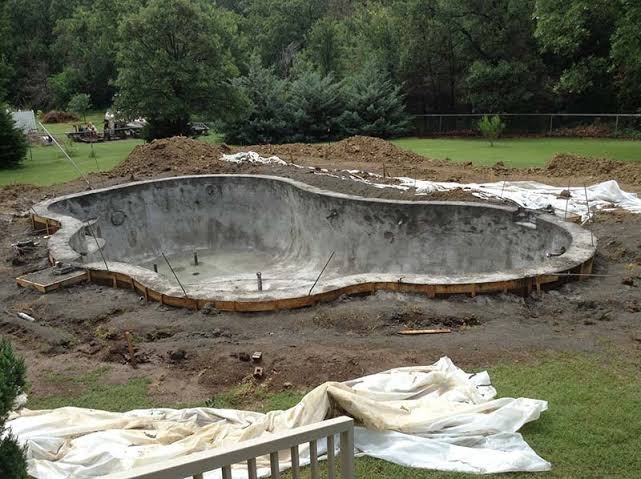
What Are the Disadvantages of Gunite in Pool Construction?
Although gunite in pool construction offers significant flexibility, it also has disadvantages.
Higher Initial Cost
A custom gunite pool can require substantial investment because it involves excavation, steel reinforcement, plumbing, concrete application, finishing, equipment, and skilled labor.
The actual price varies considerably between locations and projects.
Factors that can influence the cost include:
- Pool size
- Pool depth
- Design complexity
- Soil conditions
- Site accessibility
- Drainage requirements
- Interior finish
- Pool equipment
- Decking
- Landscaping
- Local labor costs
- Permit and inspection requirements
For this reason, homeowners should be cautious of generic online estimates and obtain detailed local quotes.
Longer Construction Process
A gunite pool is constructed through multiple stages rather than simply delivered as a finished shell.
Excavation, plumbing, reinforcement, gunite application, curing, finishing, inspections, and landscaping can all affect the overall timeline.
Weather and site conditions can also cause delays.
Interior Surface Maintenance
The concrete shell is not the same thing as the pool’s interior finish.
A gunite pool typically receives a separate interior surface. That finish requires appropriate water chemistry and maintenance.
Poorly managed pool water can contribute to staining, scaling, or premature surface deterioration depending on the finish.
How Much Does a Gunite Pool Cost?
The cost of a gunite pool varies significantly, so there is no single price that applies to every project.
A small, simple pool in an accessible yard can have very different costs from a large custom pool with an attached spa, complicated landscaping, premium finishes, and difficult excavation.
When comparing gunite in pool costs, consider the complete project rather than just the basic construction price.
Your estimate may need to account for:
- Design and engineering
- Excavation
- Reinforcement
- Gunite or shotcrete
- Plumbing
- Electrical work
- Interior finish
- Tile and coping
- Pool equipment
- Decking
- Permits
- Landscaping
- Drainage
- Additional water features
A low initial quote may not actually be cheaper if important features are excluded.
Gunite vs. Fiberglass Pool
One of the most common questions homeowners ask is whether gunite or fiberglass is better.
The answer depends on your priorities.
A gunite pool is constructed on site and provides extensive design flexibility. A fiberglass pool arrives as a manufactured shell, so the available shapes and dimensions are determined by the manufacturer.
| Feature | Gunite Pool | Fiberglass Pool |
|---|---|---|
| Custom shapes | Excellent flexibility | Limited to available designs |
| Construction | Built on site | Prefabricated shell |
| Custom features | Highly flexible | Depends on shell design |
| Installation | Multi-stage | Generally simpler shell installation |
| Surface | Separate interior finish | Factory-manufactured surface |
| Design freedom | Very high | More limited |
If customization is your highest priority, gunite in pool construction may be attractive. If you prefer a prefabricated shell and a different installation approach, fiberglass may deserve consideration.
Gunite vs. Shotcrete for a Pool
The terms gunite and shotcrete can cause confusion.
Traditionally, gunite refers to a dry-mix process where water is introduced at the nozzle. Shotcrete is a broader term for concrete pneumatically applied through a hose and may involve wet-mix or dry-mix methods.
Because pool contractors sometimes use the terms differently, homeowners should ask for the technical specifications instead of relying only on the label.
The important questions are:
- What material is being used?
- What application method is being used?
- What reinforcement design is specified?
- How will the material be cured?
- What quality-control procedures are followed?
These details tell you much more about the proposed gunite in pool construction than the terminology alone.
How Long Does a Gunite Pool Last?
A properly designed and constructed concrete pool can provide long-term service, but there is no guaranteed lifespan for every gunite pool.
The structural shell and interior finish should be considered separately.
The concrete structure may remain in good condition while the interior finish eventually needs renovation. Water chemistry, soil movement, drainage, construction quality, environmental exposure, and maintenance can all influence the condition of the pool.
Instead of asking only how many years a gunite in pool structure will last, ask the builder about the construction specifications, warranty, maintenance requirements, and expected renovation needs.
Does Gunite in Pool Construction Crack?
Yes, concrete pool structures can develop cracks.
A crack does not automatically mean the entire pool has a serious structural problem. Its importance depends on its size, location, movement, cause, and whether it is associated with water loss or other symptoms.
Possible causes can include:
- Ground movement
- Structural stresses
- Drainage problems
- Construction defects
- Site-specific soil conditions
- Other environmental factors
If you notice a significant, widening, or leaking crack, have it assessed by a qualified pool or structural professional.
Do not assume that every crack can be solved simply by applying a surface patch.
How Do You Maintain a Gunite Pool?
Regular maintenance helps protect the pool’s interior finish, water quality, and equipment.
Test Pool Water Regularly
Monitor water chemistry according to the requirements of your pool finish and sanitation system.
Common measurements include pH, sanitizer levels, total alkalinity, and calcium hardness.
The correct targets can vary depending on the pool system and finish, so follow the manufacturer’s or qualified pool professional’s recommendations.
Brush and Clean the Pool
Regular brushing and cleaning helps reduce the buildup of debris, algae, and contaminants.
Keep baskets clean and maintain the filtration system according to the equipment manufacturer’s instructions.
Watch for Water Loss
Some water loss is normal because of evaporation and splash-out.
However, unexplained or unusually rapid water loss may indicate a leak. If you suspect a leak, have the pool and plumbing system professionally evaluated.
Inspect the Pool Surface
Regularly look at the interior surface for unusual stains, cracking, exposed aggregate, rough areas, or other changes.
Early attention can help prevent minor maintenance issues from becoming more expensive problems.
Can You Resurface a Gunite Pool?
Yes. Resurfacing is one of the common renovation options for an existing concrete pool when the interior finish has reached the end of its useful service condition.
The appropriate resurfacing material depends on the existing surface, pool condition, desired appearance, budget, and contractor recommendations.
Common finish categories include plaster, quartz-based finishes, and pebble-based finishes.
However, resurfacing is not a substitute for structural repair. If the underlying gunite in pool shell has a significant structural problem, that issue needs to be addressed separately.
Is Gunite in Pool Construction Worth It?
For homeowners who want a highly customized in-ground pool, gunite in pool construction can be an excellent option.
Its biggest advantage is design flexibility. You can create a pool that fits the property rather than choosing only from a limited set of prefabricated shapes.
However, gunite also requires careful planning, skilled construction, appropriate curing, ongoing water chemistry management, and periodic maintenance.
The best choice depends on your budget, property, desired design, maintenance expectations, and local contractor expertise.
What Should You Ask a Gunite Pool Contractor?
Before hiring a contractor, ask detailed questions about the entire construction process.
Important questions include:
- What exact concrete system and application method will you use?
- What reinforcement specifications are included?
- How will drainage and groundwater be managed?
- What curing process will be followed?
- What interior finish is included?
- What pool equipment is included in the quote?
- Are permits and inspections included?
- What warranties are provided?
- What conditions could increase the final price?
- Can you provide references for similar completed projects?
Getting these details in writing makes it easier to compare different gunite in pool contractors and proposals.
Frequently Asked Questions About Gunite in Pool Construction
What is gunite in a pool?
Gunite in a pool is a dry-mix concrete material that is pneumatically sprayed onto reinforced steel to form the structural shell of an in-ground swimming pool.
Is gunite good for pools?
Gunite can be a good choice for homeowners who want a highly customized concrete pool. Its suitability depends on engineering, soil conditions, construction quality, budget, and long-term maintenance.
Is gunite stronger than concrete?
Gunite is a method of applying concrete rather than a completely different structural material. The strength of the finished pool depends on the concrete mixture, reinforcement, application, curing, design, and construction quality.
Is gunite better than fiberglass?
Neither is universally better. Gunite provides much greater design flexibility, while fiberglass uses a prefabricated shell and offers a different construction and maintenance approach. The right choice depends on the homeowner’s priorities.
How long does gunite take to cure?
Concrete curing is a process rather than a single moment when the material suddenly becomes finished. The contractor should follow the specified curing procedure and allow the shell to reach the required condition before proceeding with later construction stages.
Does a gunite pool need to be resurfaced?
The interior finish of a gunite pool may eventually need resurfacing or replacement. The timing depends on the type of finish, water chemistry, maintenance, environmental conditions, and its physical condition.
Can gunite pools be any shape?
Gunite allows extensive customization and can accommodate many shapes and features. Structural engineering, property limitations, plumbing, building codes, and construction requirements still determine what is practical.
Is gunite in pool construction expensive?
It can be more expensive than some prefabricated pool options because the pool is constructed on site and may involve extensive customization, labor, reinforcement, finishing, and additional features. Actual costs vary by project and location.
Final Thoughts
Gunite in pool construction is popular because it gives homeowners exceptional freedom to create a custom in-ground swimming pool. From unusual shapes and built-in seating to tanning ledges and attached spas, gunite can accommodate designs that may not be possible with a standard prefabricated shell.
But the quality of a gunite pool depends on much more than the material itself. Proper engineering, reinforcement, application, curing, drainage, finishing, water chemistry, and ongoing maintenance all matter.
If you are considering a gunite pool, compare detailed contractor proposals, understand what is included in the price, and evaluate the long-term maintenance and renovation requirements. A well-planned project can give you a durable pool that fits both your property and your lifestyle.